NYK Kamo Maru


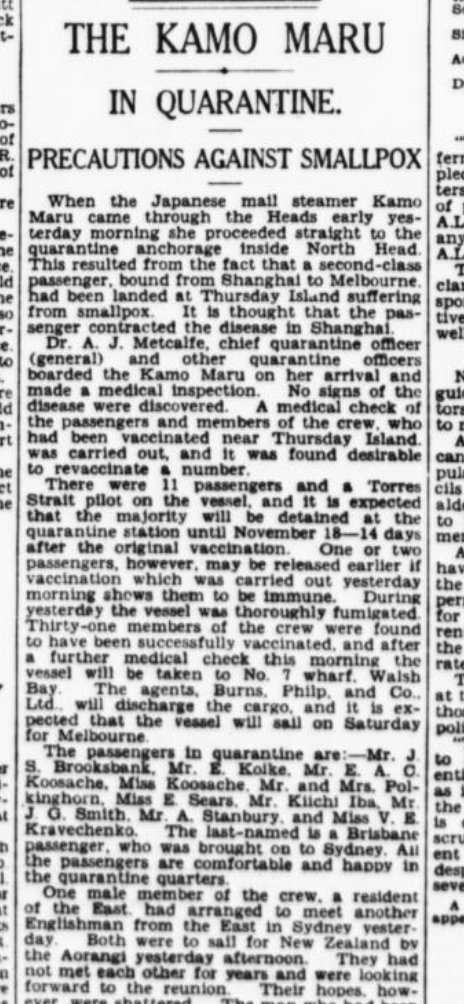
smh 13 Nov 1931
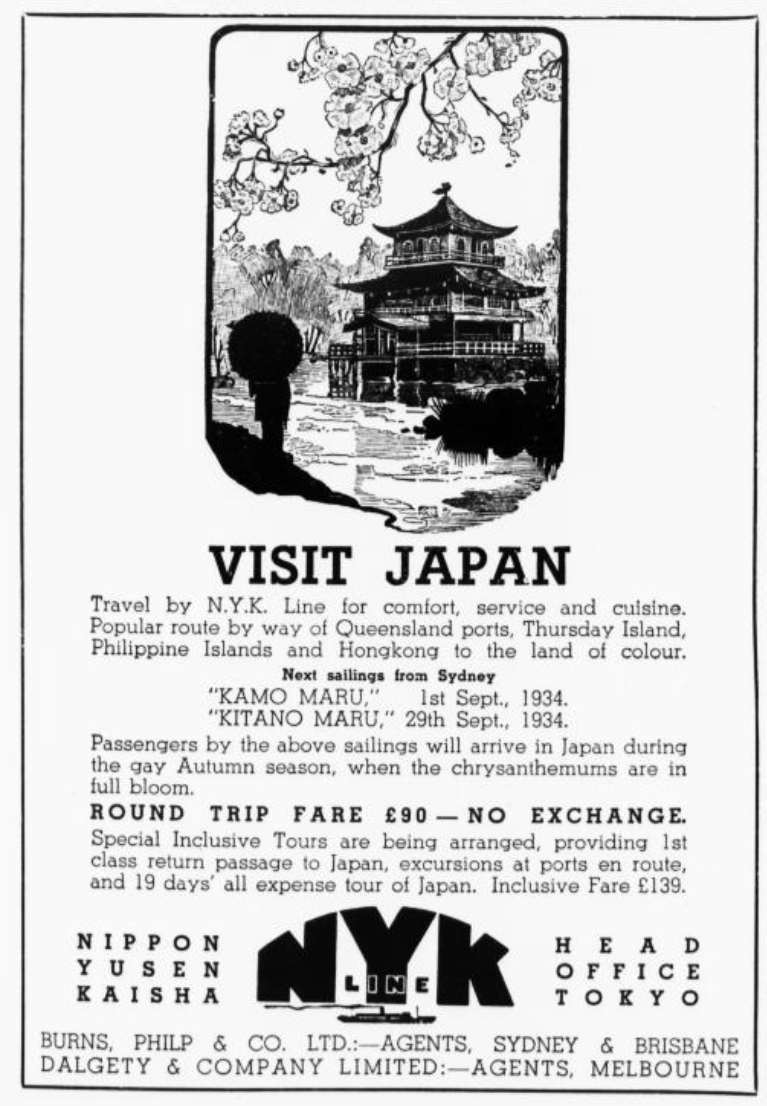
nyk ad sydney Mail 11 Jul 1934
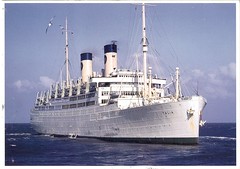
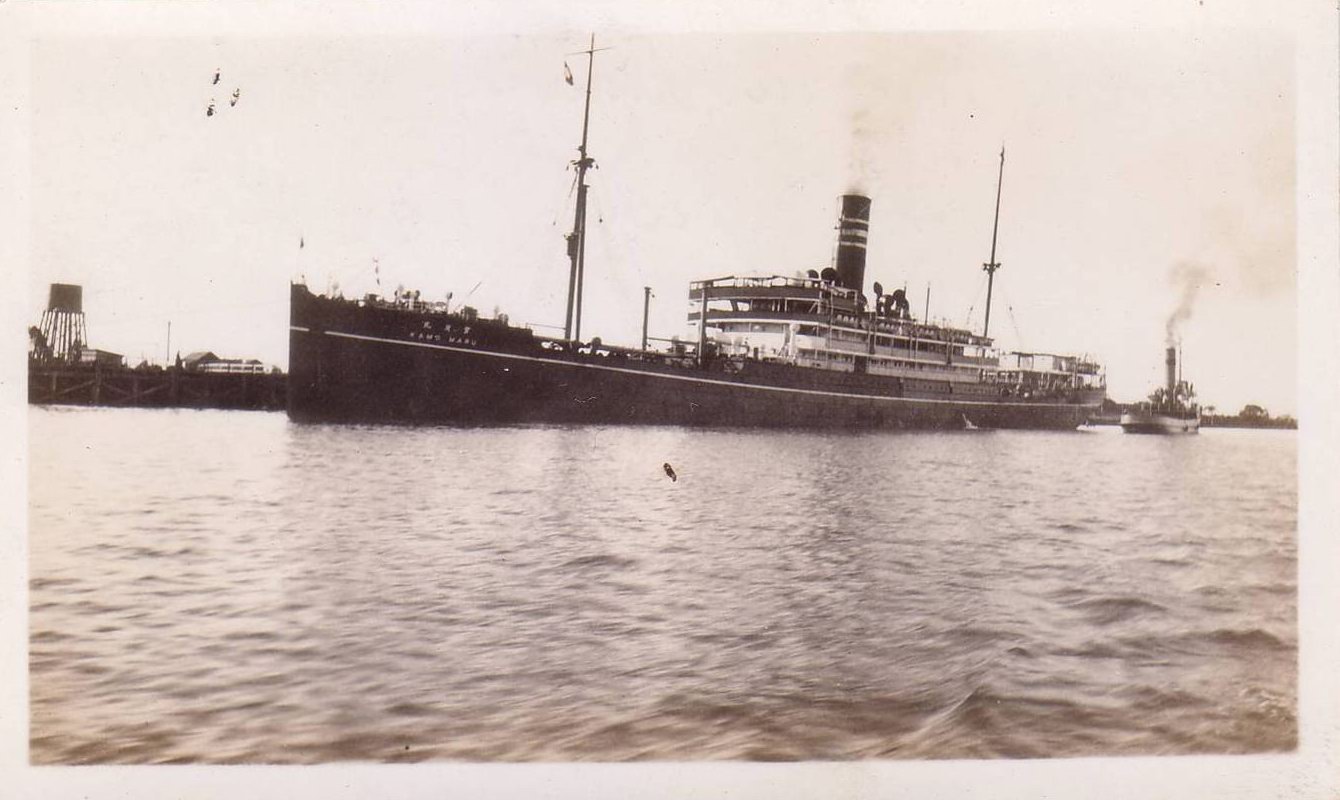
Kamo Maru  Leaving Pinkenba 04.06.1934


An old photo from fellow cruising adict and friend, Jo.

Kamo Maru was built in 1908 for Nippon Yusen Kaisha line, a subsidiary of Mitsubishi.

Although there is no official record available, she was probably built in the shipyards of Mitsubishi Heavy Industry, Ltd, in Nagasaki.

At just over 8,500 GRT and 470 feet long, she operated as a passenger, cargo and mail ship, regularly visiting Australia, China and other Asian ports.  In fact, as you can see from the ad from the Sydney Mail, NYK offered regular cruises out of Melbourne and Sydney via Queensland, Thursday Island, Phillippines and Hong Kong to Japan.

In 1931 The Sydney Morning Herald reported that Kamo Maru had to drop off a passenger from Shanghai who had been diagnosed with Smallpox. The ship was then quarrantined for several weeks at North Head in Sydney while the passengers were monitored to see if anyone else contracted the disease.

In 1936 she was involved in a collision at sea with another vessel while sailing to Sydney.

She continued to visit Australia until the outbreak of war with Japan in 1941.

In July 1944, the submarine USS Tinosa torpedoed and sank Kamo Maru in the East China Sea west of Kyushu. 

Thanks for the fascinating photo, Jo!

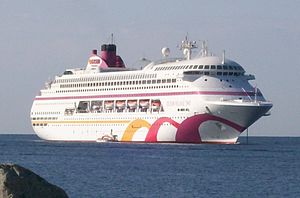
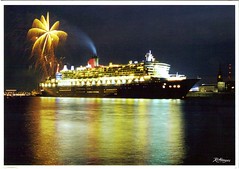
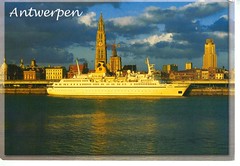
Primexpress / Karina

A postcrossing post card from Judit in Belgium

The ship in the picture is “Carina” (you might be able to see the name КАРИНА in cyrillic on her bow).

Length: 122m, 7600GRT, 328 passengers.

She is currently known as “Rochale One” and operates as a static ship for student accommodation in Amsterdam.

She was built in Nantes, France in 1977 for the then Soviet government and named “Aywasowski”. She operated cruises out of the Black Sea and the Mediterranean.

She was renamed Carina after she was bought by German company Phoenix Reisen in 1997. She changed hands again in 2000 and was renamed “Primexpress Island”, operating out of Cyprus.

The ship was impounded in the port of Limassol (Cyprus) because of unpaid bills.

She was eventually purchased by a consortium of three Dutch housing companies acquired the vessel, towed it to Amsterdam and configured it for use as hotel accommodation for students.

Her engines are kept in working order, so she is capable of sailing as and when needed.

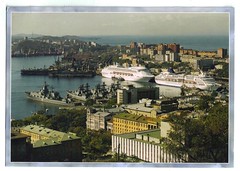
Regal Princess in Vladivostok


A postcrossing postcard from Alla who lives in Vladivostok and actually studies at the University of Southern Qld.

Vladivostok is Russia’s largest pacific sea port, and home to the Russian Pacific Fleet. It is located near to the Russian border with China and North Korea.

Among the numerous naval vessels, you can see two cruise ships. The one on the left is Regal Princess, which was renamed Pacific Dawn in 2007. I am not able to name the cruise ship on the right.  My friend Geoff from Oz Cruise Club tells me the ship on the right is Norwegian Wind (now Superstar Aquarius), which cruises the Asia Pacific region most of the year.

Thanks for the postcard, Alla!

HINT: Click on the image if you’d like to see a larger version

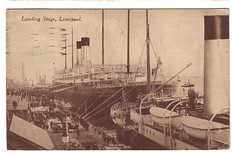
RMS Baltic

A Postcard from Miry.

RMS Baltic is the twin funnelled ship whose stern is visibile in the picture.

At the time she was built in 1903, RMS Baltic was the largest ship in the world, with a GRT of 23,876 and a length of over 222 metres.

She was the third of a set of four ships dubbed “The Big Four”, abd built for the famous White Star line by Harland and Wolff in Belfast – the same yard that made RMS Titanic.

Her maiden voyage was from Liverpool (the port seen in the picture) to New York in 1904. Her Captain, Edward J Smith was later to be the captain of RMS Titanic in 1912.

In 1909 she rescued survivors of the collision between another White Star Liner, RMS Republic, and SS Florida off the coast of Newfoundland.

In 1912 she transmitted ice warnings to RMS Titanic before that ship’s fateful collision with an iceberg.

In 1929 she rescured passengers of the sinking ship, Northern Light.

She was scrapped in Osaka in 1933.

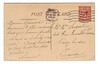
This postcard was mailed in 1928 from Liverpool to France (see reverse side for details).

So much history in one postcard. How wonderful!

SS Orford

A postcard from Grant in South Australia.

Built for Orient Lines in 1928, SS Orford was loaned to France during WW2 as a troop carrier. She ran aground in Marseilles while evacuating troops in 1940. It took seven years for her to be refloated, after which she was scrapped.

She made many journeys between Australia and England in the 1930’s. In 1934 she carried Don Bradman’s cricket team “The Invincibles” from Australia to England along with the Australian Davis Cup tennis team.

RMS Orion / SS Orion


23,300 GRT, and 203m in length.

A postcard from Grant in South Australia.

Built as RMS Orion by Vickers Armstrong in 1934, she was the first single-funnelled ship to be built for the Orient Line since the turn of the century. She was also the first ship to be painted in the Orient Line’s corn-colored livery, sporting a pale yellow hull.

She was the first British ship to ever have air-conditioning. In fact her entire interior design was ground-breaking in that she departed from the formal english styles found in wealthy British homes of the time, and adapted a more open-air and spacious layout that was better suited to tropical cruising. Wide promenade decks, slideing glass doors, removable walls, and chromium / bakelite fittings made her feel roomier and breezier, which was a welcome relief in the hot ahd humid tropics.

She was launched by the Duke of Gloucester. But, unusually, he was in Brisbane at the time, and the ship was in Lancashire, UK. He launched the ship by pressing a button in Brisbane, which transmitted a radio signal to the dockyards untimatley causing the ship to slide down the slipway into the water – quite revolutionary for the 1930’s.

She served as a troopship during the second world war, and was involved in a damaging collision with Battleship HMS Revenge when Revenge’s steering gear jammed.

She had an extensive fit-out after the WW2, and voyaged to Australia and the USA.

The National Archives of Australia record that she brought many immigrants to Australia during the late 1940’s, and the 1950’s, eventually being broken up fopr scrap in 1963.

What a fascinating history.

New Instant Slideshows!

I’ve upgraded ShipWatcher so you can view slideshows of recent images for any ship.

If you have a look under each image, you’ll see a new green arrow that looks like this:

The new "Play Slideshow" but for all ships

The new "Play Slideshow" but for all ships

Click on that arrow, and you’ll see slideshow of recent images from the database.

ShipWatcher keeps a photo archive of interesting photos from each webcam, but it doesn’t record ALL photos.  So if some of the photos you see in the slideshow are older than you expect, that’s because it’s been a while since ShipWatcher automatically captured any photos from it.  The best way to make sure there are more photos in the archive is to click on the Camera button () and manually take some photos.

You can run slideshows for several ships at once, but the more ships you select, the longer it will take to display a new picture.

While the SlideShow is running, the green arrow will change to a “Stop” button that looks like this:

Click on the Stop button to stop the SlideShow.  The most recent image from the camera will then be displayed.

It took me a while to work out how to do this, so if you use it, please let me know.  If I know that people are using some of these new things, I’ll add more fun toys!

Why don’t you try it out now?

New Webcams: Crystal Serenity / Crystal Symphony

Thanks to Robert Heuman for suggesting we add ships from Crystal Cruises.

Crystal Serenity and Crystal Symphony are now available on ShipWatcher. They have three webcams each: forward, port and starboard.

Welcome to the new ShipWatcher Blog!

I’ve moved the ShipWatcher blog from Blogger to the WordPress platform, and hope you like the changes.

Please update your browser favourites, and RSS readers.

I wanted to say a special thank-you to all the photographers who made their work available under the Creative Commons license and let me use their images as banners on the site.

I’m new to WordPress, so if you’ve any suggestions about how I could improve this blog, please let me know!

Suomen Joutsen

A Postcrossing postcard from Anne in Finland.

The three masted, full rigged “Suomen Joutsen” was built in 1902. She has a steel hull and plied the trade routes between ports in the Atlantic and Pacific Oceans. Since this was before the days of the Panama Canal, this means she frequently passed through the treacherous waters of Cape Horn on the southern tip of South America.

In 1930, the Finnish Navy purchased this beautiful ship for use as a Training Vessel.

From the mid 1950’s she was a stationery seamen’s training vessel, but in 1991 she was purchased by the city of Turku and operates as a museum.

What a beautiful grand lady of the sea. And what a gorgeous painting by Håkan Sjöström.

Thanks Anne. You made my day!